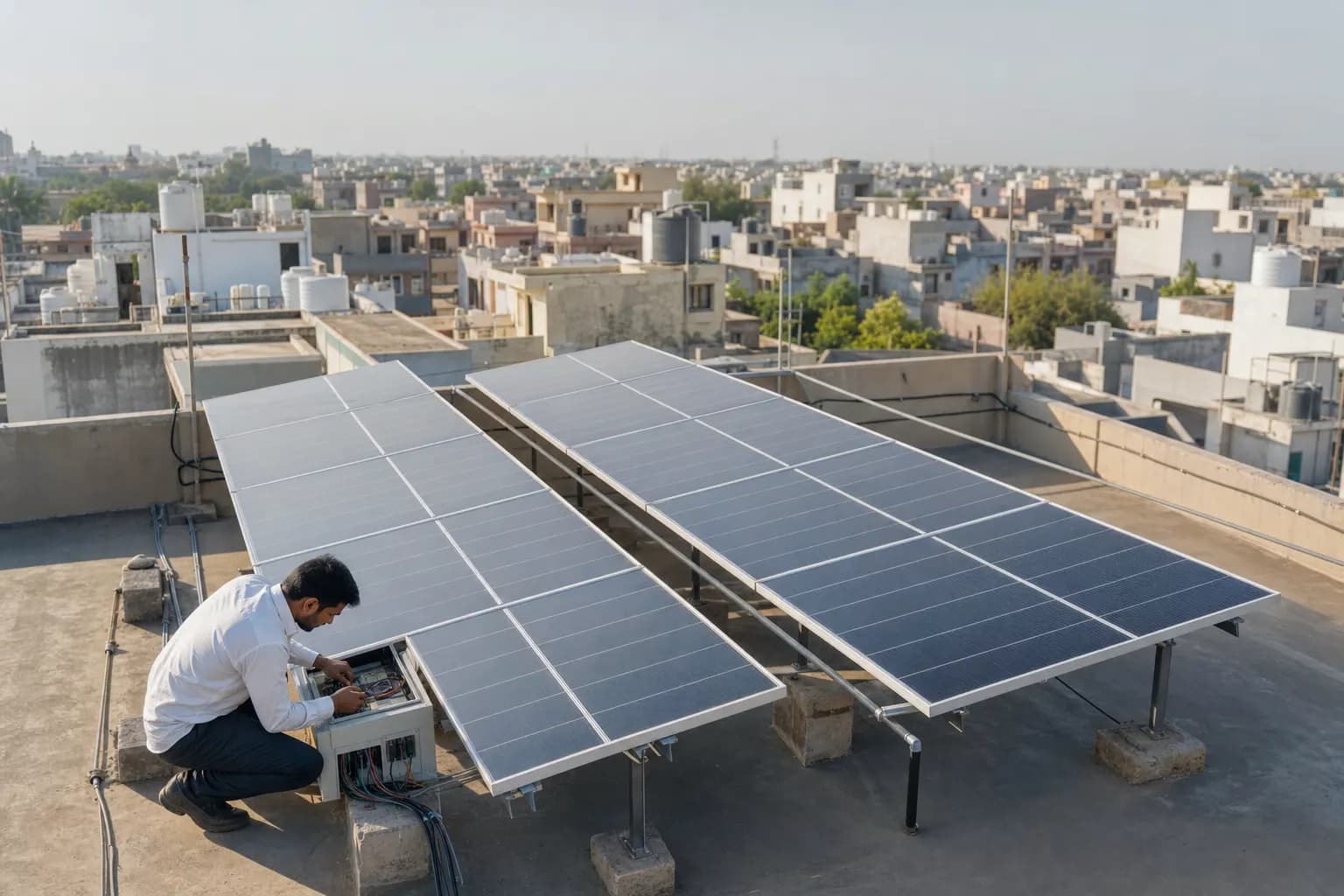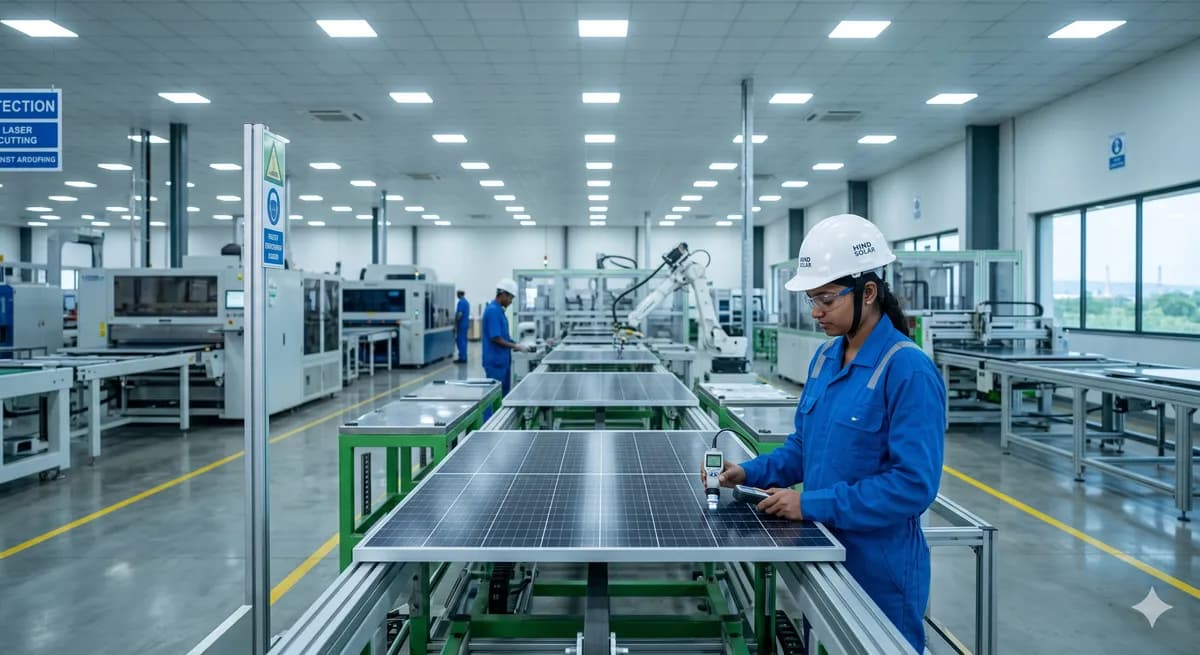

If you're mid-planning a commercial or industrial solar project right now, there's a regulatory deadline you need to understand clearly — not from a WhatsApp forward, but from the actual notification. From June 1, 2026, India's ALMM 2026 rules require that solar projects using net metering or open access be built with modules and cells from the government's approved manufacturer lists. This isn't a future possibility. It's already in force.
This article explains exactly what ALMM 2026 covers, who it actually affects, and what to check before you sign anything for your factory's solar project.
What ALMM Actually Is, in Plain Language
ALMM stands for Approved List of Models and Manufacturers — a framework maintained by India's Ministry of New and Renewable Energy (MNRE). It exists in two parts:
- ALMM List-I covers approved solar module manufacturers — essentially, which finished panel brands and models are certified for use.
- ALMM List-II covers approved domestic solar cell manufacturers — this is the newer, more demanding layer, because it governs what's actually inside the panel, not just who assembled it.
The distinction matters: a panel can be assembled in an Indian factory under an Indian brand name and still fail List-II compliance if the solar cells inside it were imported, often from China. Under ALMM 2026 rules, both layers matter for certain project types.
What Changed Under ALMM 2026, and When
The Ministry of New and Renewable Energy confirmed in a notification dated May 25, 2026 that there would be no blanket extension of the ALMM List-II deadline beyond June 1, 2026. Here's what that means in practice:
- From June 1, 2026, net-metering and open access solar projects must use modules from ALMM List-I built with solar cells from ALMM List-II.
- Projects commissioned before June 1, 2026 are exempt from the List-II cell requirement — they're effectively grandfathered in under the previous rules.
- Limited case-by-case relief is available for projects that have already made significant progress — for example, where modules have been installed but commissioning is pending, or where land acquisition, financial closure, or connectivity arrangements are already underway. Developers seeking this relief must file documented claims through a dedicated portal, with submissions accepted only through June 30, 2026.
This is a meaningfully different situation from a blanket "non-DCR panels are banned" headline you may have seen — the rule is specific, dated, and has defined exemption pathways, which is exactly why it pays to understand the details rather than react to the panic version.
Who ALMM 2026 Actually Affects
This is the part most factory owners get wrong, so it's worth being precise.
ALMM 2026 List-II requirements apply if your project involves:
- Net metering (where you export surplus solar power to the grid and draw back from it)
- Open access (where you procure renewable power through grid-connected open access arrangements)
- Government-backed schemes, government projects, or projects under government programs
ALMM 2026 List-II requirements currently do not apply to:
- Purely captive, behind-the-meter systems used entirely for self-consumption with no grid export
In other words, if your factory's planned solar system involves net metering or open access — which is true for most commercial and industrial installations that interact with the grid in either direction — ALMM 2026 applies to you. If you're planning a fully isolated, off-grid captive system with zero grid interaction, the List-II cell requirement currently doesn't apply, though ALMM List-I module certification considerations may still be relevant depending on your scheme.
The Compounding Cost Effect: ALMM 2026 and Rising Solar Prices
Here's why ALMM 2026 matters financially, not just procedurally. India's domestic solar cell manufacturing capacity sits at roughly 27–31 GW, while domestic module assembly capacity is significantly higher — creating a real supply gap for cell-compliant components, particularly in high-efficiency technologies like TOPCon.
This supply-demand mismatch is a meaningful contributor to the broader commercial and industrial solar cost increase of roughly 25% year-over-year that buyers are seeing in 2026 (covered in detail in our cost breakdown article). If you received a solar quote before this year, or even early in 2026, it likely doesn't reflect current ALMM-compliant component pricing — which means the number you've been planning your budget around may already be out of date.
What to Check Before Signing Any Solar Contract Right Now
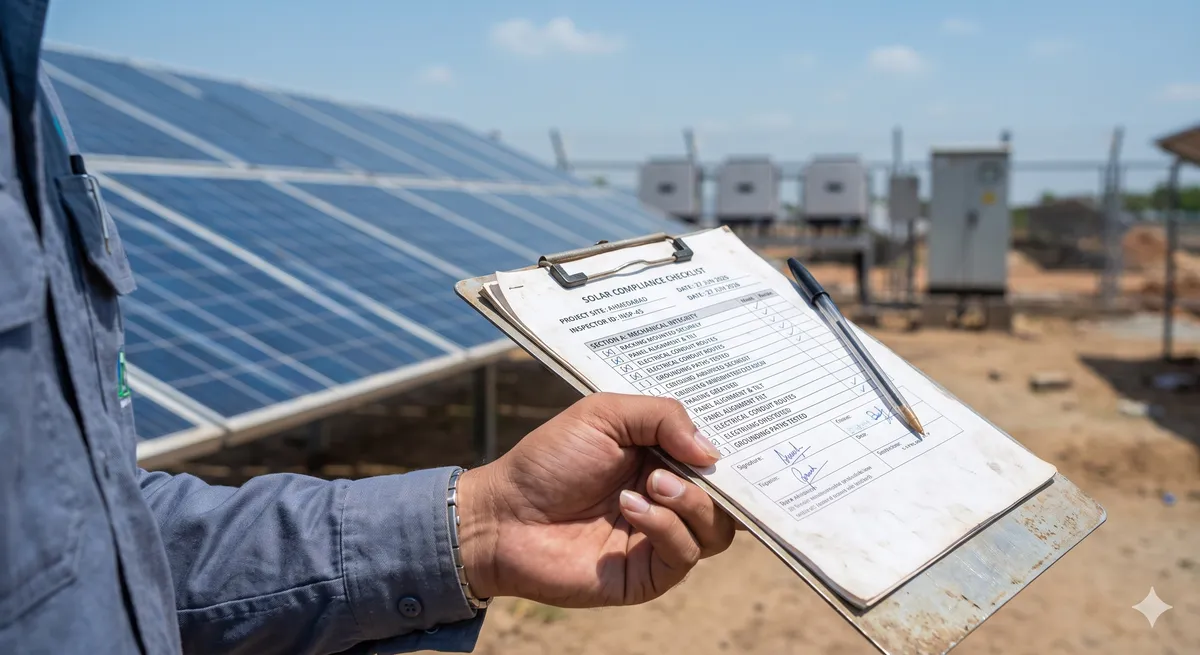 Given the ALMM 2026 mandate, here's a short, practical checklist before you commit to any vendor for a net-metered or open access commercial solar project:
- Confirm the specific panel model is on the current ALMM List-I — not just that the manufacturer's brand appears somewhere on the list in general.
- Confirm the cells inside that module are sourced from an ALMM List-II approved domestic supplier, if your project involves net metering or open access.
- Ask explicitly whether your vendor's stock is pre- or post-mandate — some vendors may still be working through inventory procured before the cell requirement took effect, which could affect both pricing and your project's compliance status.
- Confirm BIS certification independent of ALMM listing — these are related but distinct quality checks.
- If your project has already started (land secured, modules delivered, or commissioning pending), ask your EPC partner whether you may qualify for case-by-case relief, and what documentation that requires.
Why Timing Your Decision Matters More Than Ever
 ALMM 2026 isn't just a compliance checkbox — it's actively reshaping component availability and pricing across the industry in real time. Acting on outdated information, whether that's an old quote or a vague understanding of what's actually banned versus what isn't, puts your project timeline and your budget at risk.
SOLEV's projects are built around current ALMM-compliant sourcing, so you're not exposed to compliance risk or last-minute pricing surprises partway through your project.
Talk to SOLEV about an ALMM-compliant solar project for your facility → This article reflects MNRE notifications as of June 2026. ALMM provisions and exemption details can be updated by the Ministry, so confirm current requirements with your EPC partner or directly via MNRE's official notices before finalizing any contract.
Frequently Asked Questions
1. What is ALMM 2026 and when does it take effect?
ALMM 2026 refers to the enforcement of ALMM List-II requirements for solar PV cells, effective June 1, 2026. It requires that net-metering and open access solar projects commissioned on or after this date use solar modules built with domestically manufactured, approved solar cells.
2. Does ALMM 2026 apply to my factory's solar project?
It applies if your project involves net metering or open access — which covers most grid-connected commercial and industrial solar systems. Purely captive, behind-the-meter systems with no grid export are currently exempt from the List-II cell requirement.
3. Is there a way to get an extension on ALMM 2026 compliance?
Limited case-by-case relief is available for projects with substantial progress already underway, such as completed module installation with pending commissioning, or secured land and financial closure. Claims must be filed with supporting documentation through MNRE's dedicated portal, with submissions accepted through June 30, 2026.
4. Why has ALMM 2026 increased commercial solar costs?
India's domestic solar cell manufacturing capacity (roughly 27–31 GW) is significantly smaller than its module assembly capacity, creating a supply constraint for ALMM List-II compliant components. This supply-demand gap is a contributing factor to the broader ~25% year-over-year increase in commercial and industrial solar costs in 2026.
5. What's the difference between ALMM List-I and List-II?
List-I certifies approved solar module manufacturers — essentially the finished panel. List-II, newly enforced from June 1, 2026, certifies approved domestic solar cell manufacturers — governing what's inside the panel. A module can pass List-I while failing List-II if its cells were imported.
6. Are projects commissioned before June 2026 affected by ALMM 2026?
No. Net metering and open access projects commissioned before June 1, 2026 are exempt from the ALMM List-II cell requirement and continue under the previous framework.